On 26 July 2023, the United States Department of State released its ‘2023 Investment Climate Statements’. Its statement on Nepal highlights political instability, widespread corruption, complex law/guidelines on immigration, bureaucratic inefficiency, unequal law enforcement, trade unions and tax administration to be the major barriers to investment. And, these factors the US government concludes—are discouraging foreign investment in Nepal.
The United States is one of the top ten countries investing in Nepal. Therefore, this critique raises deeply troubling questions: If the US—a country with a 76-year-old diplomatic tie with Nepal; one of the largest bilateral donors; the country that can make an immediate impact at the mention of its name—holds such reservations about investing in Nepal, then what might be the situation for investors from other countries? What message would such reports and conclusions convey and how will they shape international investors’ perception of Nepal? In the context of the public release of this US report, let me share with you a story of one such FDI that was prevented from entering Nepal despite relentless efforts. T his is a story that unfolds over nearly seven years, wherein the investor finds themselves ensnared in the web of political instability, selfish and corrupt political leaders and bureaucracy, and self-serving and greedy ‘industrialists’, only to finally be forced to return. This is the story of Aliko Dangote of Dangote Group, an industrialist from Nigeria, the largest economy of the African continent. Dangote Group established its business empire in Africa by venturing into large-scale industries of cement, chemical fertilizers, sugar and flour. In 2012, Dangote Group set their sights on a global presence. Dangote, which came to fame in Africa with the cement industry, decided to begin its foray into foreign markets with the cement itself. For this, discussions were initiated about Nepal, India, Iraq, Myanmar, Indonesia, Vietnam, Brazil, and Chile. Due to the strategic location between the large economies of India and China, and Nepal’s almost ‘virgin’ status from the perspective of large-scale foreign investment, Dangote decided to begin its work from Nepal with a belief of receiving both a welcoming environment and economic
concessions.
The story of Dangote’s departure: How FDI is being discouraged in Nepal
by Prashant Aryal
On 26 July 2023, the United States Department of State released its ‘2023 Investment Climate Statements’. Its statement on Nepal highlights political instability, widespread corruption, complex law/guidelines on immigration, bureaucratic inefficiency, unequal law enforcement, trade unions and tax administration to be the major barriers to investment. And, these factors—the US government concludes—are discouraging foreign investment in Nepal. The United States is one of the top ten countries investing in Nepal. Therefore, this critique raises deeply troubling questions: If the US—a country with a 76-year-old diplomatic tie with Nepal; one of the largest bilateral donors; the country that can make an immediate impact at the mention of its name—holds such reservations about investing in Nepal, then what might be the situation for investors from other countries? What message would such reports and conclusions convey and how will they shape international investors’ perception of Nepal? In the context of the public release of this US report, let me share with you a story of one such FDI that was prevented from entering Nepal despite relentless efforts. This is a story that unfolds over nearly seven years, wherein the investor finds themselves ensnared in the web of political instability, selfish and corrupt political leaders and bureaucracy, and self serving and greedy ‘industrialists’, only to finally be forced to return. This is the story of Aliko Dangote of Dangote Group, an industrialist from Nigeria, the largest economy of the African continent. Dangote Group established its business empire in Africa by venturing into large-scale industries of cement, chemical fertilizers, sugar and flour. In 2012, Dangote Group set their sights on a global presence. Dangote, which cam to fame in Africa with the cement industry, decided to begin its foray into foreign markets with the cement itself. For this, discussions were initiated about Nepal, India, Iraq, Myanmar, Indonesia, Vietnam, Brazil, and Chile. Due to the strategic location between the large economies of India and China, and Nepal’s almost ‘virgin’ status from the perspective of large-scale foreign investment, Dangote decided to begin its work from Nepal with a belief of receiving both a welcoming environment and economic concessions.
With extensive experience in the sugar and cement industries, the Dangote Group conducted feasibility studies for both in Nepal. In the end, taking into consideration the demand-supply gap in cement at that time, the availability of limestone mines and potential access to the Indian market, the group decided to invest in the cement industry among the two. Based on this decision, discussions were held with the Investment Board of Nepal, which then
issued the permit to establish a cement factory on 18 October 2013. In the permit, mining the raw material for the factory, along with the production and sale of the cement were mentioned. This was the first approved FDI project since the establishment of the Investment Board. Following that, a company under the name of ‘Dangote Cement Nepal Pvt. Ltd.’ was registered, for which the group paid a whopping 5 lakhs 74 thousand rupees in government fees only. This was the first company to have paid such a hefty sum to get registered in the history of company registration in Nepal. Dangote Cement had a total capital of NRs. 56.23 billion and an authorized capital of NRs. 16.87 billion. Aliko Dangote is the richest person not only in Nigeria, his conglomerate is the largest in Africa. His business empire, called the Dangote Group, operates in various industries ranging from manufacturing to trade and is headquartered in Lagos, Nigeria. According to the Forbes list, Aliko Dangote has held the title of Africa’s richest person for the past 12 years. In the latest global ranking, he is listed as the 124th wealthiest person. He is the wealthiest person of African origin in the world. While Dangote Cement was getting registered in Nepal, Aliko Dangote held the position of Africa’s wealthiest person for four consecutive years and was ranked 23rd richest in the world by Forbes that year.
In search of mines Following the registration of Dangote Cement in Nepal, the group was enthusiastic. At that time, Nepal’s daily cement production was around 3000 metric tons, while the demand was 7500 tons. Dangote’s proposed factory in Nepal alone aimed to produce 6000 metric tons daily. After meeting the local demands, their main objective was to export to the Indian market, especially in the states of Uttar Pradesh and Bihar. It would have been relatively easier for Dangote to enter the Indian market by investing in Nepal as well. Given that Nigeria is India’s one of major business partners and Dangote Group one of the major Nigerian businesses, they were confident in receiving India’s cooperation or a swift proceeding without any legal or administrative delay. Indian companies and human resources continue to be employed in many industries of the Dangote Group. Moreover, the head of the group Aliko Dangote was the Chief Economic Advisor to the then Nigeria’s President.
Around the time of company registration, Dangote Group had conducted a market survey in India through an Indian agency. The survey report showed positive prospects. Primarily, competition in quality and price was important in the Indian market. Internal analysis had already shown that Dangote could manufacture cement of higher quality than that of its Indian counterparts. They also estimated to be able to compete on price with the quantity of cement they were aiming to manufacture.
Therefore, Nepal also had to make policy-level decisions to facilitate the export. Discussions for the same were ongoing as well. Alongside the company’s registration process, the initial task was to secure the limestone mines. For that, the officials of Dangote Group had to visit the offices of the Prime Minister, the Minister for Industry, Commerce and Supplies, the Investment Board, the Department of Industry, the Department of Mines and Geology, and others dozens of times. Since it was going to be a greenfield FDI, Dangote Group was confident that the government would facilitate the mining license for necessary raw materials. In reality, getting the mining license became a Sisyphean struggle even when everyone including the Prime Minister had been positive. Almost a year and a half past the Investment Board’s permit was spent running around in the hope of getting the mine. In the end, Dangote was informed that they would not be granted a mining license without a tender.
Since there was no immediate possibility of a government mine tender, Dangote was advised by government officials to acquire a private company with a limestone mining license instead. With no other alternative, as per the government officials’ suggestions, the Dangote Group then acquired a company with a limestone mining license for Bhimphedi Makwanpur. The Group acquired had the company after seeing potential from the preliminary feasibility test and studies. After the acquisition, additional detailed studies and tests began.
Among the studies conducted were road surveys to transport cement machinery from the Sunauli and Raxaul border checkpoints, environmental impact assessment (EIA), surveys for the construction of a conveyor to transport limestone over a distance of 13 km from the mine to the factory, feasibility studies for machine supplier companies, and additional drilling to conduct a detailed study of the quality and quantity of limestone.
Around 150 million rupees had already been spent on these activities and then, the drilling
reports did not come ‘positive’. That is, the quality of limestone on the inside turned out to be of
low quality. This squashed Dangote’s plan to establish a cement factory around Hetauda.
Technical Proposal Rejected Officials of the Dangote Group were perplexed as to what to do next. Once again, they started
visiting the offices of the Investment Board, the Department of Mines and Geology and the
Ministry of Industry, Commerce and Supplies. During the process, they found out that the
department was planning to invite tender for a few mining licenses, and so they started
preparation for it.
On 14 March 2017, an invitation for tender for eight limestone mines was published. Dangote submitted the technical and financial proposals for three of the sites. However, on 3 November 2017, the Department of Mines and Geology sent a letter to Dangote Cements asking them to withdraw their bids stating that all three of their technical proposals were disqualified. Evaluators of the proposals might have their arguments in this matter. However, the rejection of technical proposals from a company that had been producing cement in 10 African countries and had made Nigeria self-reliant in cement was definitely strange.
Later, among the limestone mines bid by the Dangote Group, the Panikharka limestone mine of Dhading and Makwanpur was awarded to a Chinese-Nepali joint venture cement company, and the Kailash limestone mine was won by a Nepali cement industry. Palpa’s Sikles limestone mine, the third one, was won by a company without prior experience in cement production; it had only ever supplied limestone to other cement industries.
When even the tender route failed them, the Dangote Group was disappointed and started
developing a negative outlook. This was because the rejection of their technical proposal, to their
understanding, had tarnished their brand image. In terms of technology, they thought of
themselves as a leader in Africa, and they still believe so. After all, the cement of the Dangote
which holds a considerable market share in the whole of the African continent, is highly regarded
in terms of quality among the products of all other multinational companies.
Final Attempt
After being disqualified from the tender competition, the Dangote Group was disheartened but
they had yet to decide what they would do next. Consequently, as a final attempt, in the process
of different stages of discussions and negotiations, the group expressed an interest in another
limestone mine located in Mahadevsthan of Dhading.
And so, on 16 April 2018, they applied for the Mahadevsthan mine at the office of the Investment
Board. The hope of obtaining a government mine through the decision of the cabinet was still
alive within them. They didn’t want to wait for another tender and spend more time in its process.
Following this application letter, the Ministry of Industry, Commerce, and Supplies contacted the
Investment Board and vice versa. But in the very first letter itself, the Ministry informed that it
would not grant permission for the Mahadevsthan mine without a tender competition. This
rendered all further communications futile.
The Dangote’s belief that Nepali politicians, bureaucrats and businessmen would help them in
establishing an industry with a greenfield FDI that not only met domestic cement demand but
also exported it while providing direct employment to 1,000 people and indirectly to 5,000
people, was now destroyed. Their enthusiasm had died down. Eventually, they closed down their
Nepal office.
An aid of 100 million
A devastating earthquake struck Nepal in April 2015 while Dangote Cement was seeking a license
to limestone mine after being registered in Nepal. Dangote Group also decided to contribute to
the relief and rescue efforts. Before that, the founder of the group, Aliko Dangote, expressed his
desire to talk to the then Prime Minister Sushil Koirala on the phone and then announce the relief
amount. Local representatives of Dangote made numerous rounds of the Prime Minister’s Office
in Singhadurbar to establish contact between the two.
When the matter reached Narahari Acharya, the then Minister for Justice, Law, and
Parliamentary Affairs, he took the initiative to coordinate, and the telephonic conversation
between Prime Minister Koirala and Dangote finally took place. Immediately after that, the
Dangote Group’s Executive Director and the Dangote Foundation’s Chief Executive Officer arrived
in Kathmandu to hand over a cheque of Rs. 100 million to the Prime Minister Koirala.
This amount was the highest support received from the private sector industry/institution during
the time of the earthquake. It was a genuine humanitarian support. However, it won’t be
otherwise to say this assistance was provided because of the relations formed during Dangote’s
preparation to establish the cement industry in Nepal.
But what is Nepal understood by Dangote after spending about 250 million rupees? According to
a retired government official who had closely followed the Dangote case, the group understood
the Nepal government as an unsupportive and corrupt government. They also felt that the
mindset that prioritizes personal gain over serious consideration of how to invite foreign
investment in the country is pervasive among government employees, political leaders,
ministers, or at the political level.
Obstacles and Obstructions
Over approximately seven years that Dangote Cement spent running around in Nepal, the
country saw six different prime ministers: Baburam Bhattarai, Khilraj Regmi, Sushil Koirala, KP
Oli, Pushpa Kamal Dahal, and Sher Bahadur Deuba.
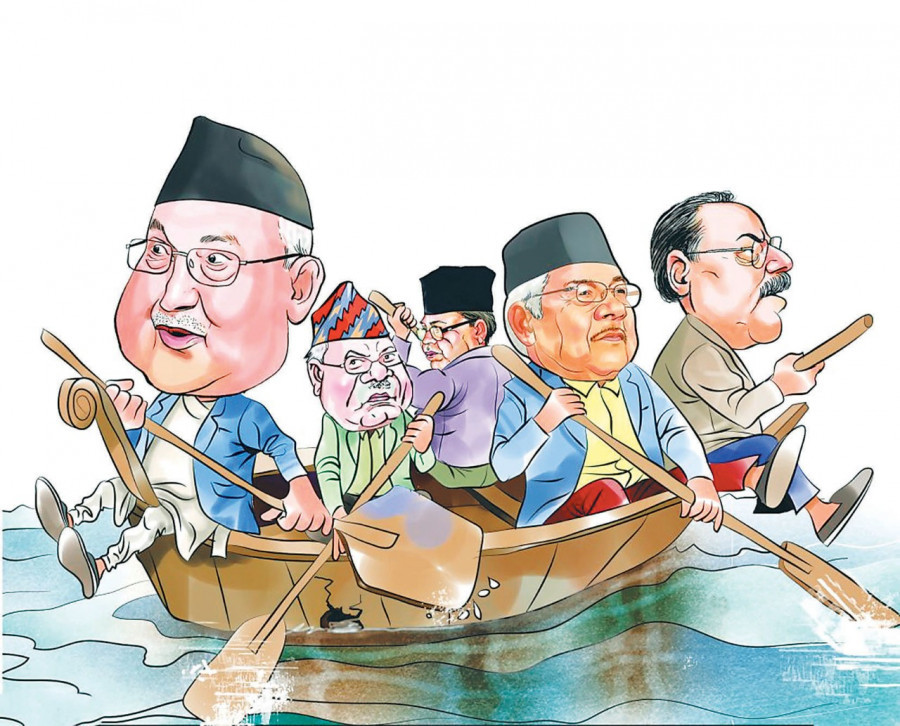
While all of them paid lip service, none of them did any work. The ministers of both the
ministries—the Ministry of Industry, Commerce and Supplies, and the Ministry of Finance were
particularly obstructive: once, at the time of evaluating the technical proposal for the tender, and
the next, when Dangote had applied for a cabinet decision for the Mahadevsthan mine.
The leadership immediately after the Radhesh Pant-led Investment Board also had a similar
lackadaisical attitude. After Pant’s departure, the Board’s communication and follow-up with
Dangote had significantly decreased to being almost non-existent. The bureaucracy was also with
the political leadership during this episode.
The local industrialists also actively worked to create an unfavourable environment against
Dangote. A cement industrialist had even proposed a partnership with them. But when Dangote
said that none of their investments had such a policy, the said industrialist was unhappy. On top
of that, Nepali industrialists were apprehensive about the prospect of being overshadowed by a
company that had twice the production capacity compared to the entire existing Nepali cement
industry.
Furthermore, the Nepali partner to the Chinese-Nepali joint venture cement company that
secured the Panikharka mine after Dangote’s disqualification is a well-known commission agent
with a long history. Describing their reach and influence would be an epic tale of its own.
If Dangote had gotten a chance in Nepal, a positive message would have been conveyed to the
global investors and further investment would’ve been encouraged. It would have served as a
positive branding for Nepal. However, the message of not allowing Dangote to invest hasreached
far and wide to investors and other stakeholders. Therefore, there is no need to hesitate to say
that those who created obstacles and obstructions have partaken in a crime against the state.
If a similar investment situation had arisen in neighbouring India, China, or other developed
countries, their diplomatic machinery would have supported the investors. The whole ordeal
would have found space in the media and among the civil society. Perhaps because there is no
connecting link between Nigeria and Nepal apart from the bilateral relations, no one spoke for
the FDI that was so close to entering Nepal; it failed to become anyone’s priority.
Bringing Dangote Back
There are precedents of the government awarding projects like Budhi Gandaki, West Seti
hydroelectric and others to foreign companies without competition through cabinet decisions. Therefore, it was not impossible to give one limestone mine to Dangote. Merely talking about welcoming foreign investment is not enough; it should also be reflected in action. Such action includes laying down a red carpet for the real investors and making the business operation process smooth to the extent of even delivering the license to their doorstep. But here, an investor who had legally entered Nepal with the promise of a greenfield FDI was not even allowed to access the raw material. Moreover, after being informed that Mahadevsthan mine would not be granted, none of the offices including that of the Prime Minister, the Chief Secretary, the Ministry of Industry, Commerce and Supplies, the Department of Mines and Geology, and the Investment Board Nepal reached out to the Dangote Group. No one inquired of them. This FDI was not of anyone’s concern. Dangote Cement Nepal has not deregistered their business yet; they’ve only closed down their
Nepal office. This means they haven’t legally retreated. Therefore, there’s still time to bring them
back.
Yes, cement might not be their priority anymore; many cement factories have come into
operation since then. Nepal is almost self-sufficient in cement production and therefore, any
cement factory established now can only be for export. And that might not be Dangote’s priority.
Currently, Dangote Group’s focus in Nigeria is on the construction of chemical fertilizer and an
oil refinery. They’re spending $2 billion on an oil refinery plant, and over $2.5 billion on a chemical
fertilizer plant. Due to the huge financial investment, the Dangote Group had been consolidating
their effort on these two projects for a few years.
The chemical fertilizer plant has been operational since last year, and the oil refinery is in the
final stage of full operation. This oil refinery, the second-largest in the world, is expected to bring
transformational change to the Nigerian economy itself. Nigeria, the country that became a
cement and chemical fertilizer exporting country because of Dangote, is gearing up to become
an oil and petroleum products exporting country as well.
Dangote Group’s priorities might change after the oil refinery plant comes into full operation.
This presents us with an opportunity to bring them back with respect. We could convince them
to invest in other industries or the development of hydropower projects if they are no longer
interested in cement. However, this is only possible with sincere and honest efforts from the
Prime Minister, ministers, the bureaucracy and the Investment Board Nepal.
Otherwise, the US statement mentioned at the beginning of this article will continue to conclude
an unfavourable investment climate in Nepal every year. And this cycle of us writing, reading,
and hearing the same thing over and over again will keep repeating.